
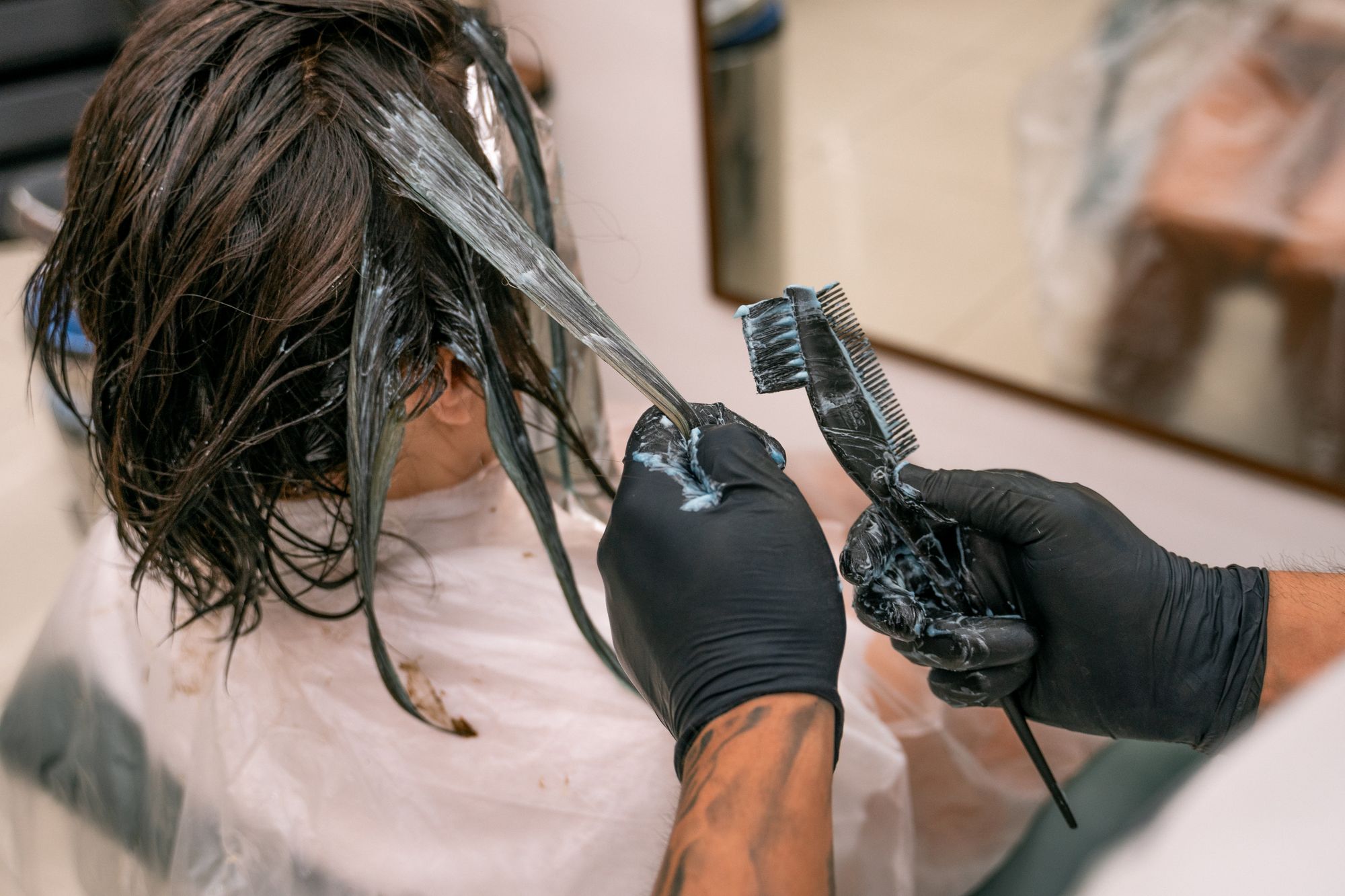
It's one of the most common requests we hear at the color station: "I'm starting to get some gray — can you just add some highlights to cover it?" It's a completely fair thing to ask. Highlights are gorgeous, they're lower commitment than full color, and the logic makes sense on the surface.
But here's the honest answer, the same one we'd give you sitting in our chair: highlights don't actually cover gray. They blend it. There's a real difference between those two things, and understanding it is the difference between loving your color and being quietly disappointed every time it grows out.
So let's walk through exactly what highlights do, why your gray will still peek through, and what actually covers it when you want it gone.
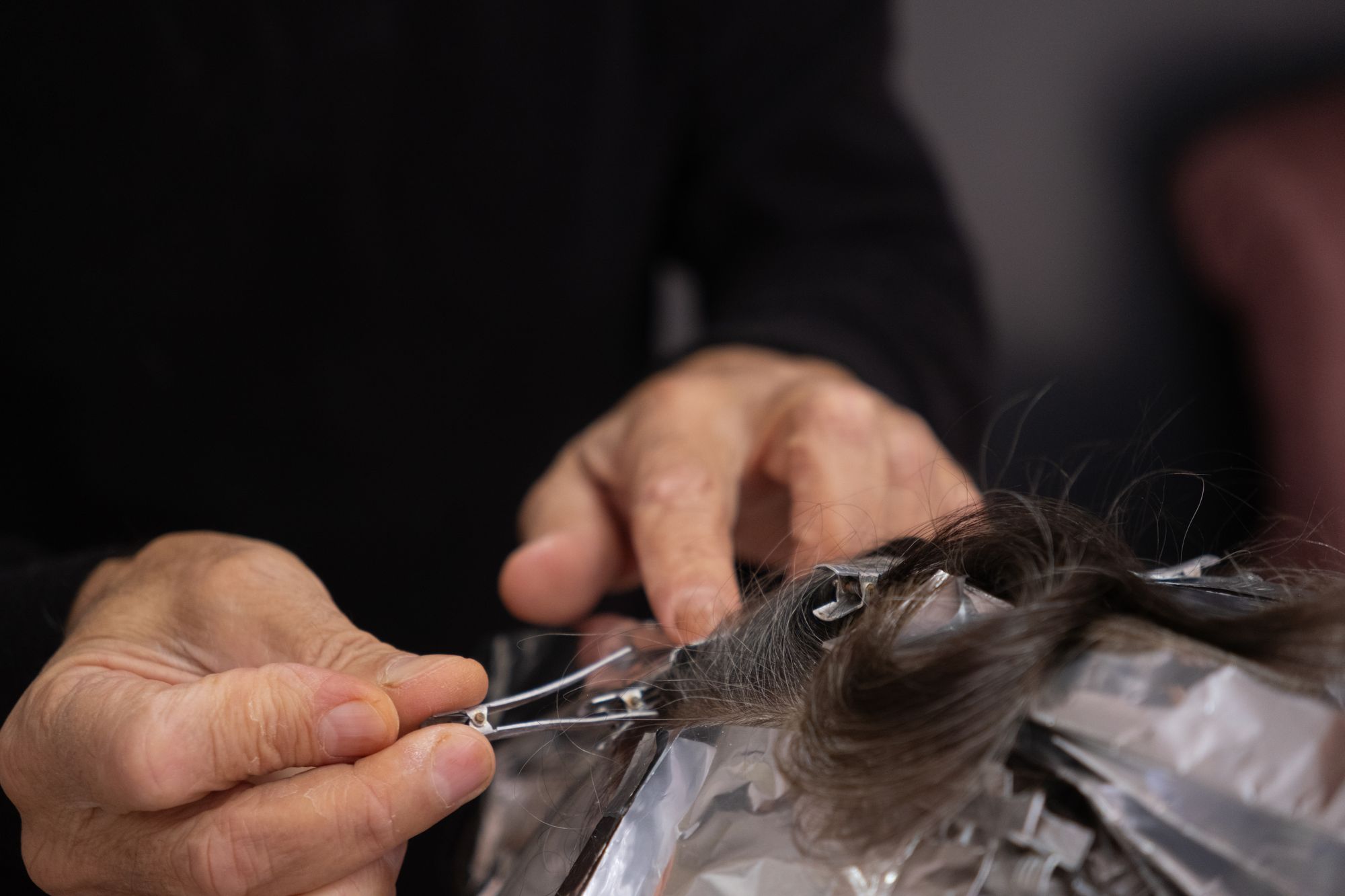
Highlights Lighten. They Don't Cover.
This is the part that trips most people up, so it's worth being clear about. A highlight is a lightening service. Your colorist takes thin sections of hair, applies lightener, and lifts those pieces to a brighter shade than the rest of your head. That's it. Highlights add lightness and dimension by removing pigment from selected strands.
Covering gray is the opposite job. To cover gray, you have to add pigment back into the hair — deposit color onto every strand so the gray takes on a new shade. Highlights, by design, never touch most of your hair. They leave the rest of it exactly as it is, gray and all.
"Highlights take color out of some strands. Covering gray means putting color into all of them. One can't do the other's job."
So when gray strands are sitting in between your highlighted pieces, they don't disappear. They're still there. They just have lighter hair next to them now.
Why Highlights "Hide" Gray — Until They Don't
Here's the reason highlights work as well as they do for a while. Gray hair isn't really gray — it's hair that has lost its pigment, so it reads as white, silver, or clear. When you place soft, light highlights throughout the hair, those white-gray strands blend right in with the lightened pieces. From a few feet away, your eye can't tell the difference between a blonde highlight and a silver strand. It all just reads as "lighter, dimensional hair."
That's a genuinely smart strategy, and for a lot of people in the early stages of going gray, it's the perfect solution. The gray is camouflaged. You get to skip the rigid root touch-up schedule that comes with all-over color.
Blending works beautifully when you're under roughly 20–30% gray. Once gray starts to outnumber your natural color — and especially as it clusters around the temples and hairline — there's simply too much of it for a scattering of highlights to disguise. The gray stops looking like dimension and starts looking like gray. That's the moment most people feel like their highlights "stopped working." They didn't. There's just more gray than the technique was ever meant to hide.
Gray also tends to be more wiry and resistant than the rest of your hair, which can make it stand out in texture even when the color blends. The more of it you have, the more it announces itself.
What Actually Covers Gray: All-Over Color
If your goal is true coverage — gray that's genuinely gone, not just softened — the answer is all-over color, also called a single-process or base color. Instead of lightening select strands, your colorist applies pigment from root to end across your whole head. That pigment deposits onto every strand, gray included, and the gray takes on the new shade right along with the rest of your hair.
That's the trade-off in one sentence: highlights give you dimension and blending with low maintenance; all-over color gives you real, opaque gray coverage with a bit more upkeep.
The upkeep part is worth being honest about. Because all-over color covers right to the root, your gray regrowth shows up as a line as it grows in — which means a root touch-up roughly every four to six weeks to keep it seamless. It's more of a routine than highlights, but it's the only thing that truly makes gray disappear.
The Best of Both: Color and Highlights Together
Here's what a lot of people don't realize is an option. You don't have to choose between coverage and dimension. One of the most popular services we do is a base color plus highlights — an all-over color to cover the gray, with highlights woven in on top for brightness and movement.
You get the full coverage of single-process color and the dimension of highlights, so your hair doesn't read flat or "one-note." For anyone who wants their gray gone and wants the lived-in, sun-kissed look, this is usually the sweet spot.
So Which One Is Right for You?
It comes down to how much gray you have and what you want it to do. Here's roughly how we think about it.
Highlights alone may be all you need. At low percentages, well-placed highlights blend gray into dimension beautifully, and you skip the root-touch-up schedule entirely. This is the lowest-maintenance route — great if you love a brighter, lived-in look anyway.
This is where blending starts to lose the battle, and where a base color plus highlights shines. You cover the gray that's now too plentiful to hide, while keeping the brightness and movement that highlights give. The most flexible option for most people.
All-over color is the reliable answer. When gray makes up half your head or more, full coverage is the only thing that delivers a clean, even result. Add highlights on top if you want dimension — but the base color is doing the real work.
And if you've decided you actually want to embrace the gray and grow into your natural silver? That's a beautiful option too, and there's a thoughtful way to transition into it without an awkward grow-out phase. That's its own conversation — and one we're always happy to have.
The takeaway is simple: highlights are a lightening service, not a coverage service. They'll blend your gray gracefully for a while, but they'll never truly cover it. Knowing that before you sit down means you'll choose the service that actually gets you the result you're picturing.
Not Sure Which One You Need?
Come in for a consultation. We'll look at how much gray you're working with, talk through what you want, and tell you honestly whether highlights, all-over color, or a combination will get you there. No pressure. No surprises.
South Lamar · (512) 472-3331 Circle C Ranch · (512) 637-08889600 Escarpment Blvd, Ste. 920H, Austin TX 78749
