
It comes up at the color station almost every week. Someone sits down, pulls up a photo of soft, sunlit blonde, and says: "I love this. But I need something low maintenance. Should I do balayage or highlights?"
It's a fair question, and it comes from the right place. Nobody wants to be locked into a standing appointment every six weeks if they don't have to be.
So here's the honest answer, the same one we'd give you in the chair: it depends. Not on which technique sounds easier, but on what your hair is starting from. Hair that has never been colored, hair that has never been colored but has gray coming in, and hair that has already been colored are three genuinely different situations, and the low maintenance winner is different in each one. Let's start with what these services actually are, then sort out which one belongs on your head.
First, What Each One Actually Is
Both are lightening services. Both use lightener to pull pigment out of selected pieces of hair. The difference is how that lightener gets placed, and how close to your scalp it starts.
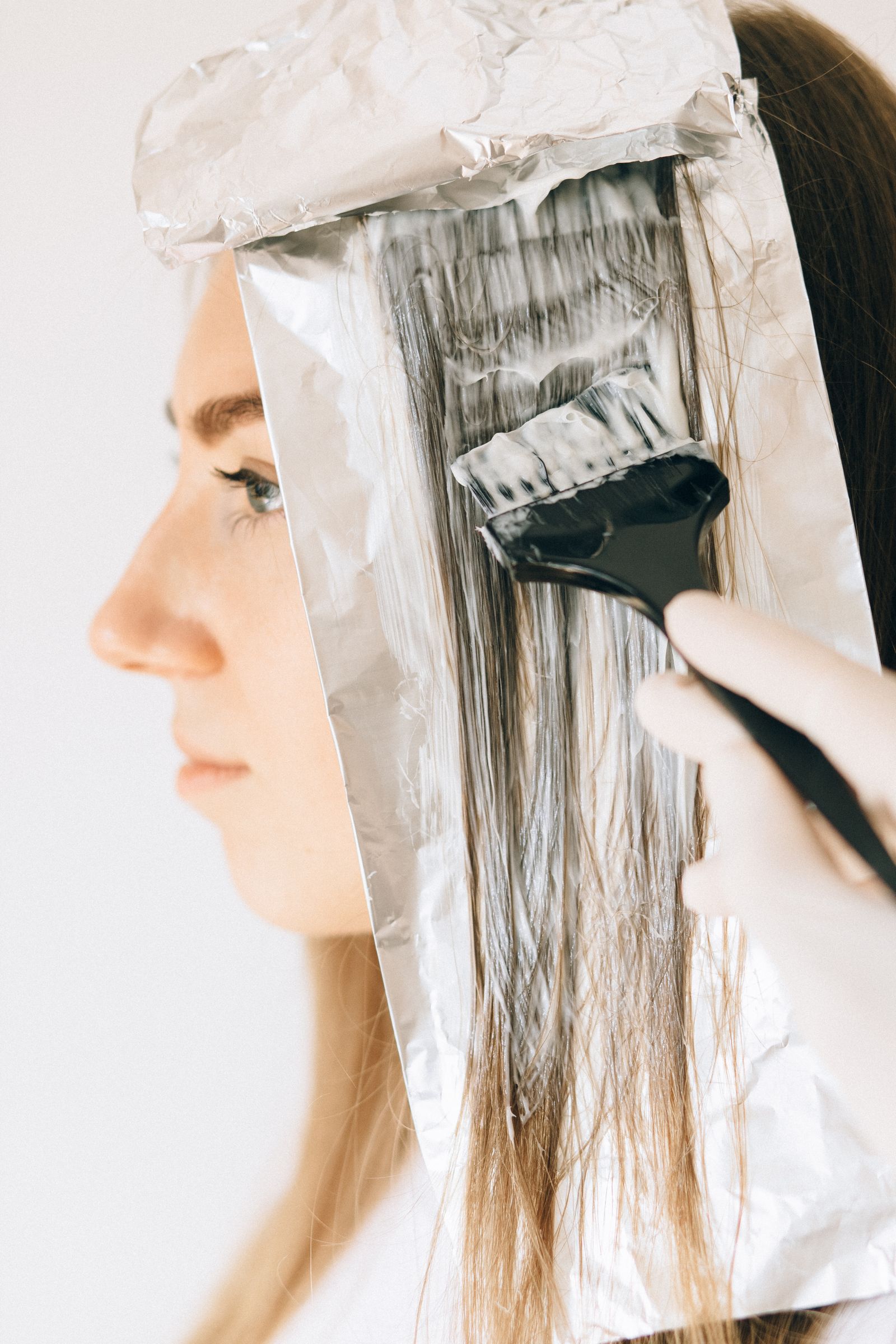
Highlights are slices or weaves of hair placed in foils. You'll usually hear them described as a partial or a full, depending on how much of your head gets worked through. Those foils are placed as close to the scalp as possible, which is what creates small ribbons of lightness running through the hair. Foil also traps heat, so the lift is stronger and more even than anything that can happen in open air.
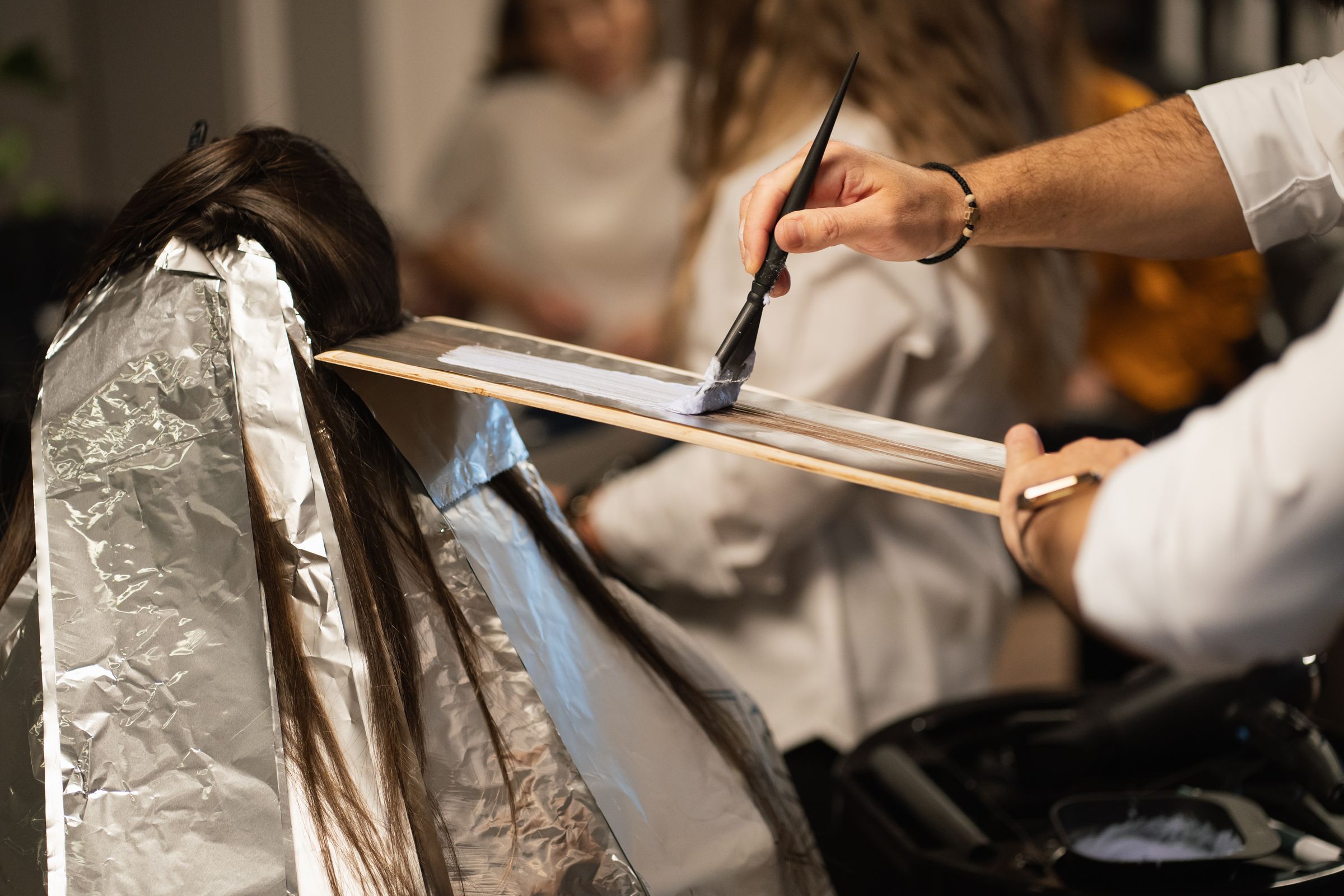
Balayage is painted. The word is French for "sweeping," which is exactly what it is. Your colorist paints lightener onto the hair in a sweeping motion to create larger dimensional ribbons of lightness throughout. It's an open air technique, meaning no foil is used at all. The lightener goes on and is left to process, which gives you several levels of lift and a natural sun kissed result. Balayage also does not go to the scalp the way highlights do, so it is a more rooted look by design.
Ask about teasylights. If you have dark brown hair and you want genuinely blonde ribbons, open air painting on its own will not get you there. With teasylights, the hair is backcombed or teased first, then painted, then placed in a foil. You keep the soft painted placement, but the foil lets the lightener give you far more lift than balayage alone.
"Low maintenance color has almost nothing to do with the technique and everything to do with how far the lightness sits from your root."
And Then There's Toner
Toner gets left out of this conversation constantly, and it is half of what makes blonde look expensive.
Toner is used after a blonding service to adjust the tone, meaning ash, gold, beige and so on, or the level, meaning how light or dark the blonding reads. It's usually applied at the shampoo bowl and takes somewhere between five and twenty minutes to apply and process. A short appointment that changes everything.
It belongs in a maintenance conversation because lightening a strand exposes the warmth underneath it. Left alone, that warmth keeps surfacing: gold, then brass, then orange, depending on where you started. Austin doesn't help. Our water is hard, our sun is relentless from March through October, and one summer of Lake Travis afternoons will pull the tone out of blonde faster than anything we do in the salon.
So the visit that keeps low maintenance color looking freshly done usually isn't more lightening. It's a toner.
A sulfate free, color protecting system like Aveda Color Control does the daily work. Blue Malva keeps brass in check between toners. And Aveda Sun Care Protective Hair Veil takes about ten seconds before you head outside and buys you weeks of tone. Skip all three and even the best placement will look tired long before your next appointment.
Now to Maintenance
Three starting points, three different answers. Find yours.
The low maintenance winner is balayage, or teasylights if you want more contrast. Because it begins as a more rooted look and never goes to the scalp, there is no hard line of demarcation as it grows out. Most balayage guests get a touch up every four to six months. During those months in between, many come in for a toner to refresh the tone.
Here the winner flips to highlights. Because highlights go to the scalp and sit in thinner ribbons than balayage, they camouflage gray in a way painting cannot. The gray is still there, but the highlights blend it out. For the lowest possible maintenance version, talk to your stylist about using color rather than bleach for the highlights. It leaves a softer line as the highlights grow out, so it's far less noticeable than a bleach highlight.
Balayage is back in the winners circle. Since it's a rooted look, you can touch up your new growth like normal between balayage retouch appointments and add a toner to those visits as needed. One caveat worth hearing before you book: if you've been coloring dark, there is a limit to how light your colorist can take your hair.
Color maintenance really comes down to one question: when your hair grows, does it create a line or a gradient? Lightener starting at the root creates a line. Painting that starts further down creates a gradient. A line demands an appointment. A gradient can wait.
Two Things Balayage Will Not Do
This is the part we'd much rather you hear before you book than after.
It will not make you very blonde in one visit. Painting is gentle by design. Without foil holding heat against the hair, each session gives you several levels of lift and no more, so going from a dark natural base to a genuinely bright blonde can take two or three appointments spread across months. If you want that contrast sooner, teasylights or foils are the honest route.
And it will not put lightness where it doesn't go. Balayage stays off the root, which means the hair framing your face stays close to your natural color. If the photo you love has bright pieces right at the part and around the temples, that's foil work.
Worth saying plainly, because it's the most common misunderstanding we hear: highlights blend gray, they don't cover it. That works beautifully while gray is still the minority on your head. Once there's more gray than natural color, especially clustered at the temples and hairline, you want a base color underneath doing the covering with highlights or balayage layered on top for movement. We wrote a whole post on that one.
What Actually Determines Your Maintenance
Three things decide how long you can go between visits, and only one of them is the technique.
The single biggest factor. Lightness that begins at the scalp creates a regrowth line on a schedule you don't control. Lightness that begins an inch or more down grows in softly. That's true no matter what the service is called on the menu.
A soft, low contrast blend against your natural color hides growth beautifully. A high contrast look, dark base with very bright pieces, announces every millimeter of it. Two guests can get the exact same technique and end up on completely different schedules because of contrast alone.
Placement buys you months. Tone is what makes those months look good. Toner appointments and a color safe routine at home stretch a maintenance schedule further than most people expect.
If You Still Aren't Sure
Book a consultation anyway. That isn't a sales line. It's genuinely the fastest way to get this right.
Bring pictures. Two or three of hair you love, and just as usefully, one or two of hair you don't. The photos you dislike tell your colorist more than you'd expect. And if something in the conversation doesn't make sense, ask for more clarification. There's no version of this where you're supposed to walk in already knowing the vocabulary.
A skilled colorist will ask questions back, and those questions are the point. How much time you actually have, what you're comfortable spending, and what you want the hair to look like two months from now rather than just the day you walk out. Your budget, your time, and the look you're after are what a color plan gets built from.
The real takeaway is that low maintenance isn't a service you book off a menu. It's a set of decisions your colorist makes with you: how far from the root the lightness starts, how much contrast you're after, and how the tone gets kept up in between. Balayage lands on the easy side of most of those, which is why it has the reputation it does. But on the right head of hair a well placed highlight will stretch just as far, and balayage on the wrong starting point will have you back in eight weeks wondering what happened.
So tell us what your life can realistically hold. Every six weeks, twice a year, or somewhere in between. That's the single most useful thing you can say in a consultation, and we'll build the color around it instead of handing you a schedule you never agreed to.
Color That Fits Your Actual Schedule
Book a color consultation and we'll look at your natural level, how your hair grows, and the look you're after, then tell you honestly which technique fits your life. No pressure. No surprises.
South Lamar · (512) 472-3331 Circle C Ranch · (512) 637-08889600 Escarpment Blvd, Ste. 920H, Austin TX 78749
