

You know the day. Somebody texts the group thread on Thursday, the boat is booked by Friday, and Saturday morning you are loading a cooler into a truck before the coffee has even kicked in. Six hours later you are floating in a cove off Devil's Cove or Hippie Hollow, the sun is doing its thing, and life is genuinely good.
Then you get home, look in the mirror, and your hair looks like it fought the lake and lost. Straw at the ends. A weird green tint if you went blonde this spring. That crunchy texture no amount of conditioner seems to fix. If that sounds familiar, this one is for you. A full day on Lake Travis is one of the harshest things you can put your hair through all summer, and almost nobody preps for it.
What a Day on the Lake Actually Does to Your Hair
Lake Travis water is hard water. It carries minerals like calcium, magnesium, and iron, and those minerals cling to the hair shaft and settle into the cuticle. On blonde and lighter color that iron and copper are exactly what turns your hair brassy or gives it that faint green cast. It is not the pool doing it this time. It is the lake.
Then stack the rest of the day on top. Hours of direct Texas sun with zero shade on the water, so the UV is hitting your hair the whole time and breaking down your color the same way it breaks down your skin. Wind off the front of a moving boat, whipping dry hair into knots and roughing up the cuticle. Sunscreen and sweat working their way into your roots. By the time you are pulling up to a dock bar for dinner, your hair has taken sun, wind, minerals, and sweat all in one shift.
"A day on Lake Travis hits your hair with hard water, wind, and six hours of open sun all at once. That is a lot to ask of a blowout."
Here is the good news. None of this means you skip the lake. It means you treat your hair the way you already treat your skin before a long day out. A little prep on the front end and a little cleanup on the back end is the whole game, and it is the difference between coasting into September and starting fall with three months of damage to undo.
Before You Leave the House
The single most effective thing you can do happens before you ever get in the truck, and it takes about thirty seconds. Start with hair that is already conditioned, then put a physical barrier on it.
Think of it like the sunscreen step. Dry hair drinks in lake water fast, which is how those minerals get deep into the shaft. Hair that is already coated and slightly damp has less room to absorb the bad stuff. So condition the night before or that morning, and then mist your hair with a UV protectant before you walk out the door. A loose braid or a low bun keeps it out of the wind and cuts down on the tangling too. It is not about looking done. It is about giving the lake less to work with.
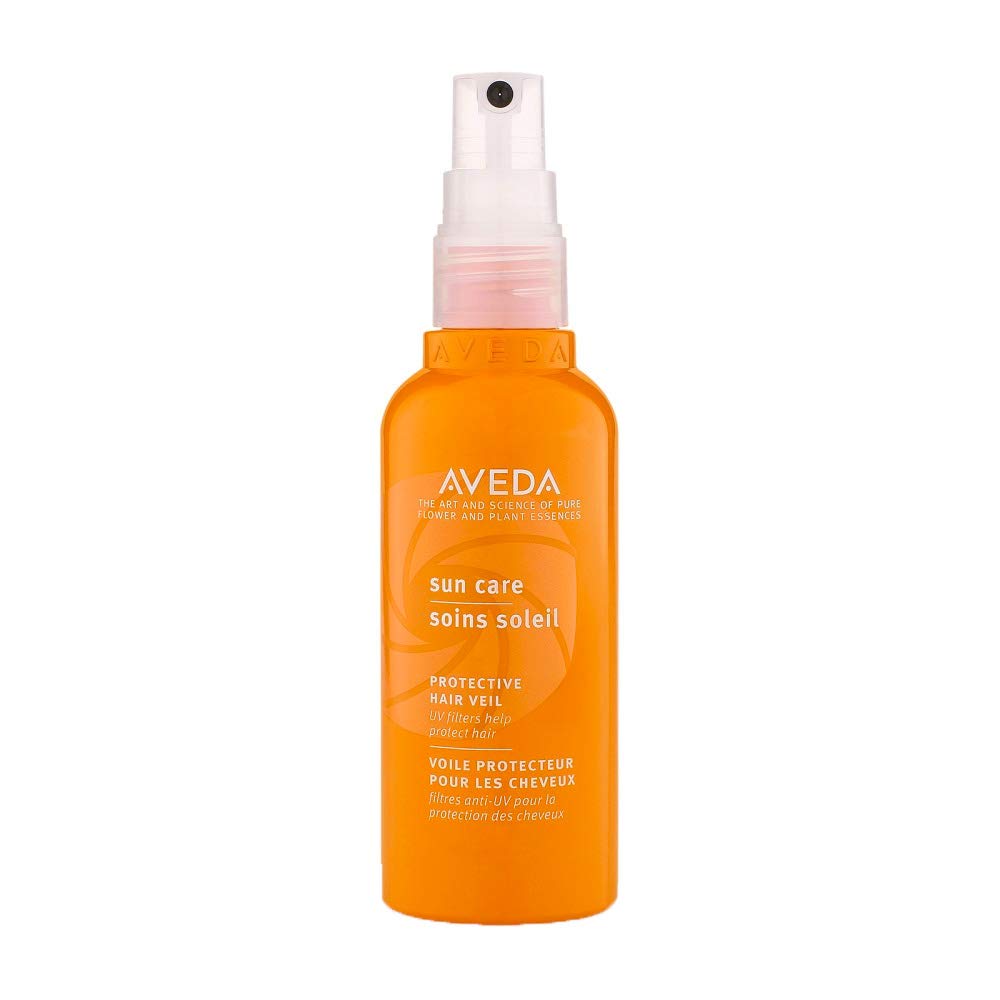
Aveda Sun Care Protective Hair Veil
A weightless, water resistant UV mist that lays an invisible screen over your hair before the sun, wind, and lake minerals get to it. UVA and UVB filters plus antioxidants help stop color fade and dryness. Spray it on before you leave, reapply after you swim, and it keeps working all day. Fits in any dry bag. $40, available at both MFX locations.
What Goes in the Dry Bag
You are already packing sunscreen, a hat, and way too many snacks. Your hair needs about four inches of that dry bag, and none of it is fussy.
- The Protective Hair Veil, because the whole point is reapplying it after you get out of the water, the same way you reapply sunscreen.
- A wide brim hat for the long stretches when you are just cruising or grilling on the dock. Shade is free protection.
- A soft scrunchie or claw clip so you can get your hair up and out of the wind when the boat is moving.
- A small bottle of water to rinse your hair before you jump in. Wet hair soaked in clean water first has less room to soak up lake minerals.
That is it. No tools, no heat, nothing that cannot survive getting splashed. The goal is just to interrupt the damage a few times over the course of the day instead of letting it run for six hours straight.
When You Get Home
This is the step everyone skips, and it is the one that actually protects your color through the rest of the summer. Do not go to bed with the lake still in your hair. Those minerals keep working on your color overnight, and that is where a lot of the brassiness comes from.
Rinse and wash the same night, even if you are exhausted and a little sunburned. A clarifying or purifying cleanser is what you want here, because a regular shampoo will not fully lift mineral buildup. Then, and this is the part that saves your ends, follow it with a real deep conditioning treatment. A full day on the lake leaves the cuticle roughed up and thirsty, and a rich masque puts moisture back into the shaft and helps smooth everything the wind and sun opened up. If the lake is a regular part of your summer, one deep conditioning treatment a week is not overkill. It is maintenance.
If you are on the water most weekends, an in salon deep conditioning treatment does more than the at home version can. We can see exactly how much the summer has taken out of your hair and match the treatment to it, whether that is a deep moisture masque for fried ends or a bond building service for color that has been through the wringer. Think of it as a reset in the middle of the season instead of waiting until September to deal with three months of buildup all at once. Book it after a big lake weekend and you will feel the difference the same day.
The clients who cruise into fall with their color still looking good are not lucky. They are the ones who prepped before the lake and cleaned up after it. That is the entire secret, and now it is yours.
Get Your Hair Lake Ready
Grab a Protective Hair Veil before your next boat day, or book a deep conditioning treatment to undo the last one. We will tell you exactly what your hair needs for the rest of the summer.
South Lamar · (512) 472-3331 Circle C Ranch · (512) 637-08889600 Escarpment Blvd, Ste. 920H, Austin TX 78749
